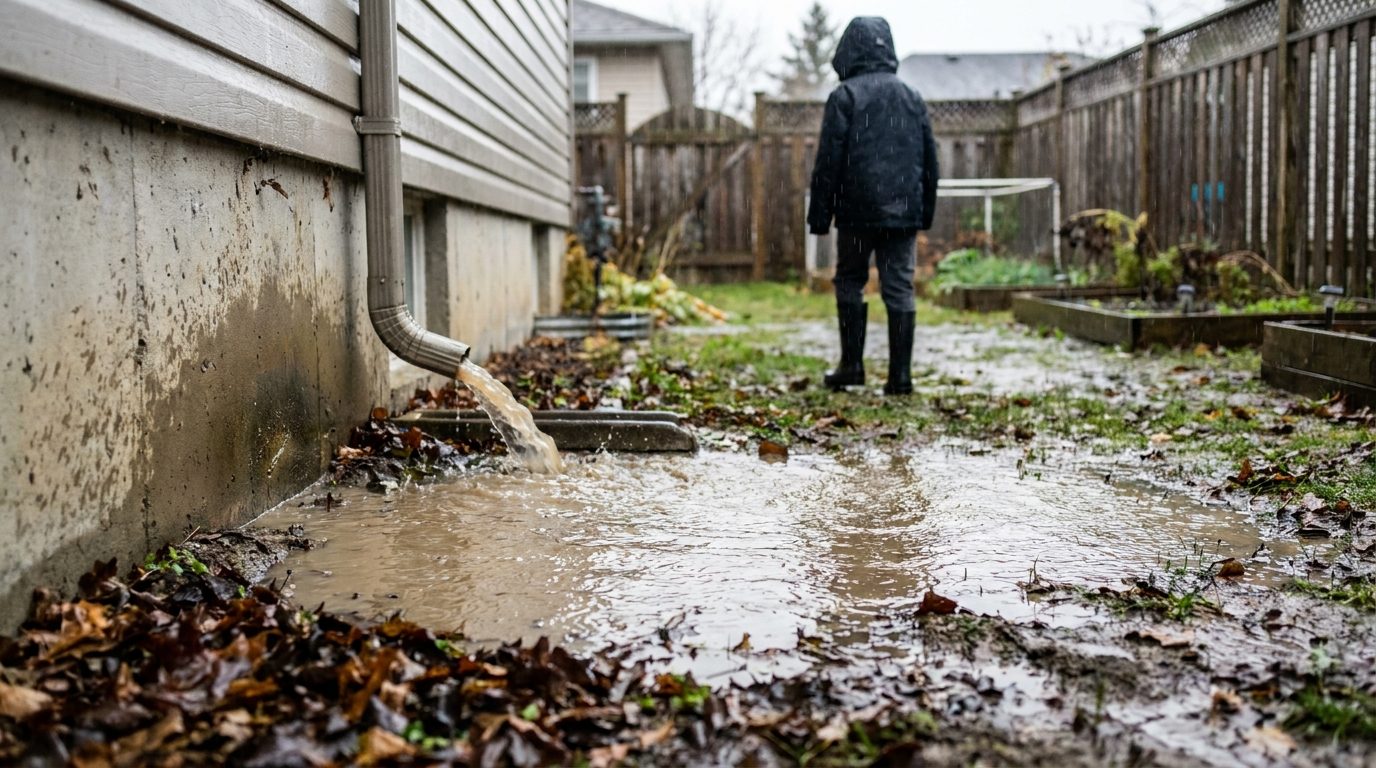
How to fix standing water in your yard after a storm
Water standing in a yard for more than a day after the rain stops is a drainage problem, and around here it is usually one of three things.
Work out which one before you spend money, because the fixes are completely different and expensive contractors have been known not to ask.
The three causes
Grade. Water is running toward the house or toward a low spot instead of away. This is the most common and the cheapest to fix.
Soil. Heavy clay that does not let water through, so it sits on the surface even where the grade is fine.
Water table. In parts of south Louisiana the water table is close to the surface and after a heavy rain it is at the surface. You are not going to drain water into ground that is already saturated.
That third one matters because it means some fixes simply will not work where I live, and people sell them anyway.
Diagnosing it
Go out during the rain, not after. Watch where the water comes from and where it goes. Ten minutes in the rain tells you more than a week of looking at a puddle.
Check the gutters and downspouts first. An astonishing proportion of standing water problems are a downspout discharging next to the house. A roof sheds a large volume of water and putting it all in one spot three feet from a foundation creates a swamp.
Extend downspouts at least six or eight feet away, or pipe them underground to daylight somewhere lower. This is cheap and it solves more problems than anything else on this list.
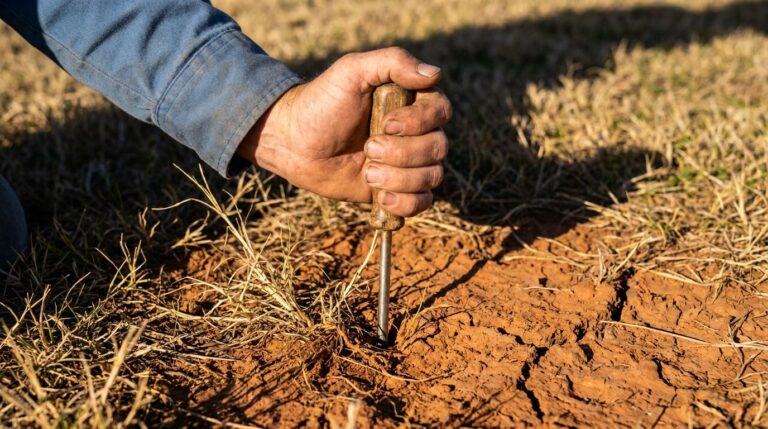
Then do the drainage test. Dig a hole a foot deep, fill it with water, let it drain, fill it again and time it. Over twelve hours to drain the second filling means the soil is the problem, not the grade.
The fixes, cheapest first
Downspout extensions. Under fifty dollars.
Regrading. Soil added to build up low spots and create a slope away from the house. The standard is about six inches of fall over the first ten feet from the foundation. This is manual work and a few loads of soil.
A swale, which is a shallow shaped depression that carries water across the yard to somewhere it can go. Looks like part of the lawn, works constantly, needs no maintenance. This is the most underused solution and it is the one I recommend most.
A French drain, which is a trench with perforated pipe in gravel, wrapped in fabric, carrying water to an outlet. Works well when there is somewhere lower to take the water to. Does nothing at all if there is no outlet, and I have seen plenty installed with nowhere for the water to go, which turns them into an underground puddle.
A dry well, a buried chamber that holds water and lets it soak away slowly. Useful for a modest volume, useless in saturated ground.
A sump and pump, which is where you end up when there is genuinely nowhere for gravity to take it.
The soil approach
If the problem is clay rather than grade, the long term answer is organic matter, aeration, and deep rooted plants.
Core aeration annually, topdressed with compost, changes heavy soil over a few years.
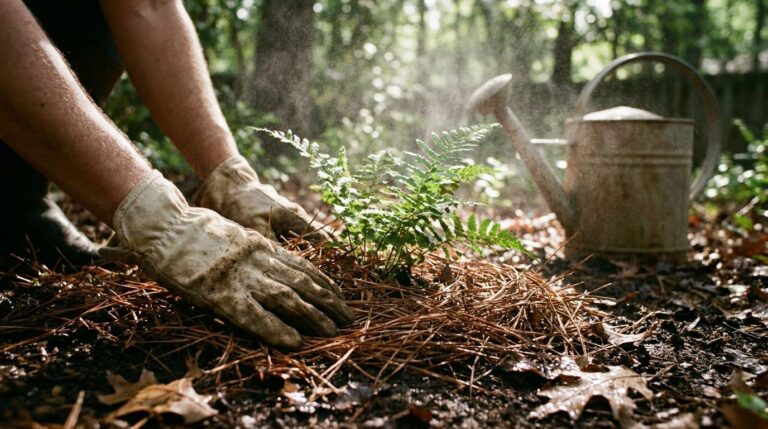
A rain garden, which is a planted depression that collects the water and holds it while it soaks in, using plants that tolerate periodic flooding. This is the option I like most for a persistent low spot, because it turns a problem area into the best looking part of the yard.
What not to do
Do not just fill the low spot with soil without understanding where the water was going. You will move the problem, often toward the house.
Do not pipe water onto a neighbour's property. That is a dispute and in many places it is also a legal problem.
Do not install a French drain without an outlet.
And do not ignore water standing against the foundation. That is not a lawn problem, it is a structural one, and around here with our soils it is the expensive kind.