How to build a successful shade garden in the humid south
Shade is not one thing, and getting a shade garden right starts with being honest about which kind you have.
Dappled shade under high tree canopy, where light moves across the ground all day. Almost anything shade tolerant will grow in it.
Morning sun and afternoon shade. The best conditions in the south, better than full sun for a great many plants, because our afternoon sun is brutal.
Full shade under dense evergreens or on the north side of a building. Real constraints here.
Dry shade under a mature tree, which is the hardest situation in gardening and which I will come back to.
Spend a day noting where light falls at nine, noon and four. It takes one Saturday and it prevents most failures.
The humidity problem
Here is what distinguishes southern shade gardening from the versions in books written for cooler places.
Shade plus humidity plus still air equals fungal disease. Powdery mildew, leaf spot, botrytis. Our summers are a laboratory for it.
So air circulation matters as much as light. Plant further apart than the label says. Thin the tree canopy to let air move, not just light. Do not crowd against a wall.
Water at the roots in the morning, never overhead in the evening. Wet foliage overnight in August is how you get every disease at once.
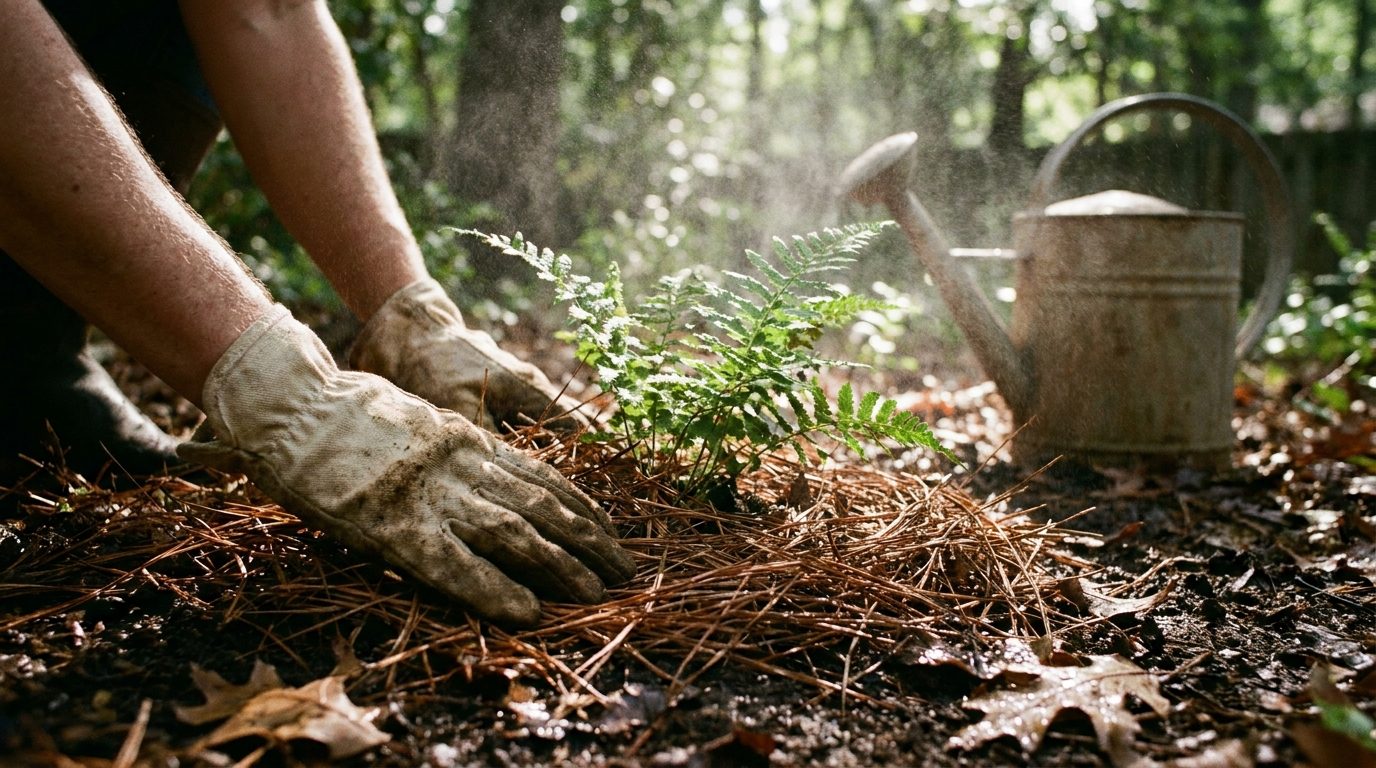
Mulch, to keep soil from splashing onto leaves, which is how most fungal spores get up there.
And choose resistant varieties. This is where plant selection pays off more than any spray.
The dry shade problem
Under a mature tree you are competing with the tree for water and for nutrients, and you will lose.
Do not build up soil over the roots. More than an inch or two of added soil over a tree's root zone can suffocate it, and killing a mature oak to grow hostas is a poor trade.
Plant small. Little plants establish between roots where a large root ball will not fit.
Plant in autumn so roots establish over winter.
Water deeply the first two years. After that, choose things that will manage.
What actually grows here
Shrubs. Oakleaf hydrangea, which is native and excellent. Itea. Clethra, for the scent. Fothergilla. Native azaleas. Aucuba and mahonia for deep shade.
Perennials. Hellebores, which are the best plant in a southern shade garden and which flower in February when nothing else does. Heuchera, ferns of every kind, Solomon's seal, foamflower, wild ginger, hardy begonia, toad lily, hosta if the deer let you.
Groundcover. Green and gold, creeping phlox in the brighter parts, sedges, which are underused and very good here.
Annuals for colour. Caladium, which is made for this climate. Impatiens, choosing the downy mildew resistant types. Coleus.
Designing it
Shade gardens live on foliage, not flowers. If you plan for bloom you will have three good weeks and a long green summer.
So work with leaf texture and colour. Something with enormous leaves next to something fine and ferny. Chartreuse against deep green. Variegation to catch light where there is little.
White and pale yellow read best in shade and light up a dark corner. Deep reds and purples disappear.
And repeat things. A shade garden with one of everything looks like a collection. Three or five of the same plant, repeated down a bed, looks intentional.
Where people go wrong
Trying to grow sun plants in shade because they like them. They will survive, stretch, flop and never flower properly.
Not enough soil preparation. Shade is usually dry and root filled and poor, and it needs organic matter more than a sunny bed does.
Planting too close. See the humidity section.
And expecting it to look like the picture in the book, which was taken in Pennsylvania in June, where the humidity is somebody else's problem.