How to keep deer from eating your backyard hostas
Deer eat hostas the way I eat crisps. Not because they are starving. Because they are there and they are delicious.
I garden in zone 7a outside Asheville and I have lost more hostas than I care to count. Here is what actually works, in order of how much I trust it.
Fencing, which is the only real answer
Eight feet. That is the honest number for a fence that stops a determined deer, and it is not a number most people want to hear for a back garden.
There are two ways around it.
Two shorter fences, about four feet apart, three or four feet each. Deer judge depth poorly and will not jump a double barrier they cannot see a landing for. This works remarkably well and it looks better than one enormous fence.
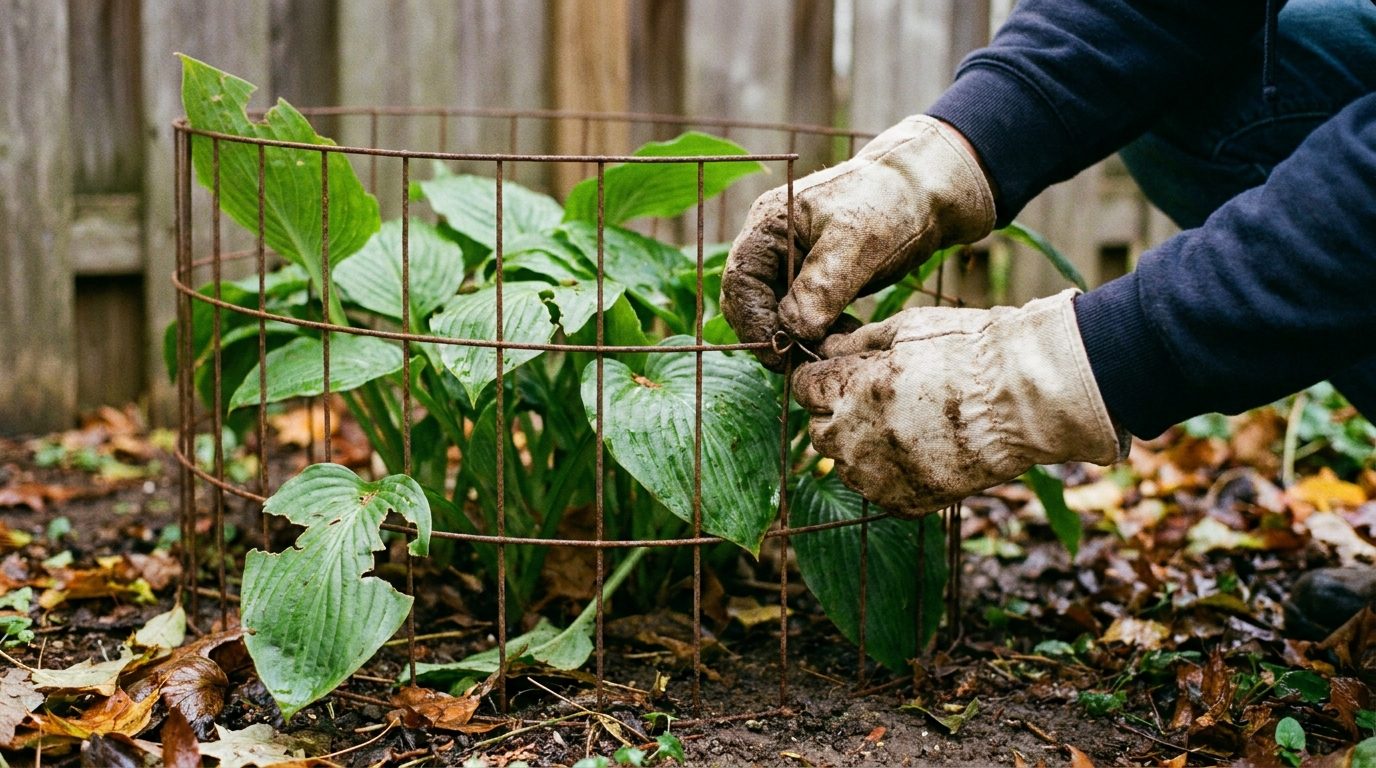
Or fence the bed rather than the garden. A low cage around the hostas themselves, or a decorative fence about three feet high around one bed, protects the plants deer actually want without enclosing the whole property.
Fishing line strung between posts at about three feet is the cheap version. The deer walk into something they cannot see and back off. It does not work forever and it costs almost nothing.
Repellents, which work if you use them properly
Most people spray once, see a deer, and conclude repellents do not work. They work. They are just a maintenance task, not a solution.
The ones that smell of rotten egg are the most effective in my experience. Deer are put off by the sulphur, which reads as a predator or as spoiled food.
The rules are simple and everyone breaks them.
Start before the damage, not after. A deer that has already learned your garden is a food source is much harder to discourage.
Reapply after rain and every couple of weeks regardless. Put it in the diary.
Rotate between two different products. Deer habituate to a smell that never changes.
Spray the new growth, which is what they eat.
What does not work
Human hair, soap bars, and the rest of the folk remedies. I tried most of them in the 1990s. Deer are neither impressed nor offended.
Motion activated sprinklers work well for about three weeks and then the deer learn the pattern. They are genuinely funny to watch and they are not a strategy.
Ultrasonic devices. I have never seen evidence they do anything.
A dog works, when the dog is outside, which is not at four in the morning when the deer come.
Plant choice, the long term answer
Deer resistant is a phrase that means less preferred, not inedible. A hungry deer in February will eat things every list says it will not.
That said, the plants they consistently leave alone share characteristics: strong aromatic foliage, fuzzy or leathery leaves, and toxicity.
Things that have survived in my garden: hellebores, ferns, daffodils, alliums, lamb's ear, boxwood, Russian sage, salvia, ornamental grasses, bleeding heart.
Things that have not: hostas, daylilies, tulips, azaleas, roses, and anything I planted the week before.
If you cannot give up hostas
Nobody should have to. Two compromises work.
Plant them close to the house, on a patio, or in containers by a door. Deer are less willing to come right up against a building with human activity.
Or choose the blue leafed varieties. The waxy coating on those leaves is less appealing than the thin green and yellow ones, and in my garden the blues are noticeably less chewed. Less, not never.
And plant them among things deer dislike. A hosta surrounded by ferns and hellebores is less obvious than a hosta standing alone in mulch.
What I actually do
A three foot decorative fence around the two beds I care about, egg based repellent every fortnight from April to October, and blue hostas near the house.
I still lose a few every year. At some point you decide whether you are running a garden or a battle, and I made that decision around 2009.