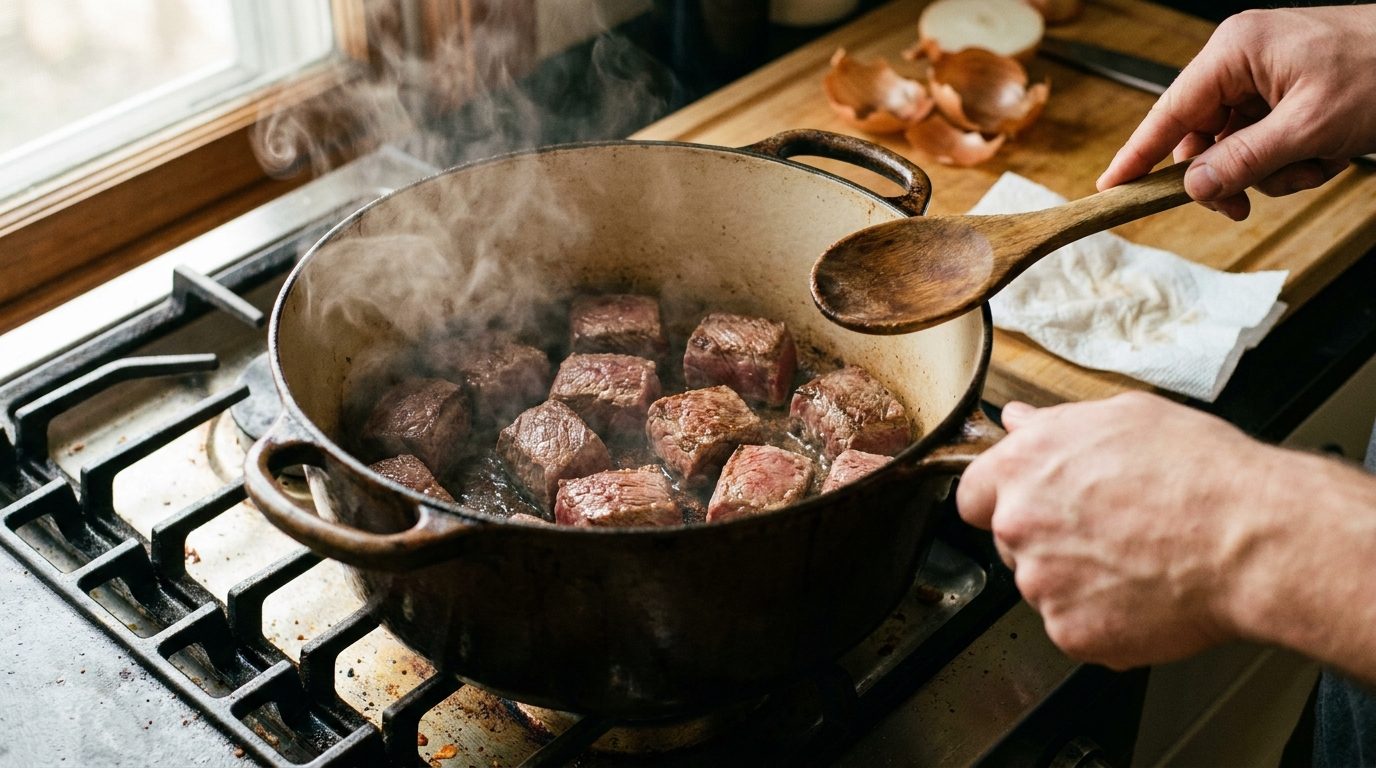
Making a rich beef stew using only one deep pot
My recipes assume you own one good pan, because for eleven years I have watched people buy equipment instead of learning technique.
A stew needs one deep pot with a heavy base and a lid. That is it.
The pot
Heavy base matters because you are going to brown meat in it, and a thin base gives you hot spots and scorching.
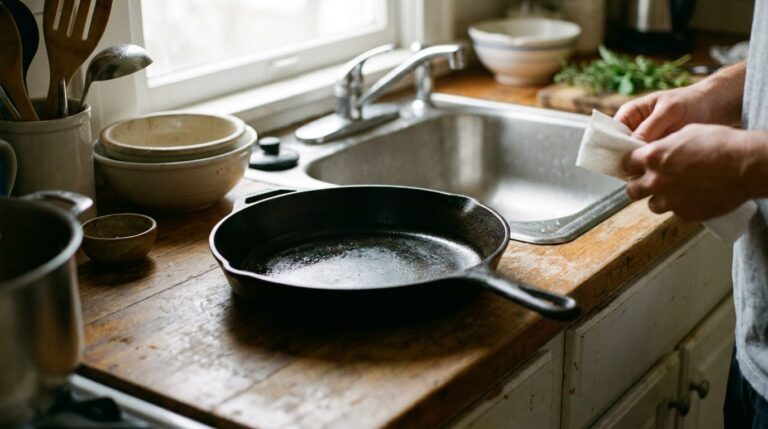
Cast iron, enamelled cast iron, or a heavy stainless pot. Five or six quarts for four to six people.
If it can go in the oven, that is better, and it is not essential.
Brown properly, which means in batches
This is the step people rush and it is where most of the flavour comes from.
Dry the meat with kitchen paper. Wet meat steams instead of browning.
Salt it. Get the pot properly hot with a film of oil.
Then put in a single layer with space between the pieces. Not the whole lot at once, which drops the temperature and floods the pot with liquid.
Leave it alone. Do not stir, do not poke. Let it form a crust, turn it, do the other side. Take it out and do the next batch.
This takes fifteen minutes and it is not optional.
Use the brown bits
After the meat comes out, the base of the pot has dark residue stuck to it. That is the flavour of the entire dish.
Put the onions in and let them release their moisture, which will start lifting it. Scrape with a wooden spoon.
Then deglaze. Wine, stock, beer, whatever you have. Pour it in while the pot is hot and scrape until the base is clean and everything is in the liquid.
If the base is black rather than brown, it burned and it will make the stew bitter. Wash the pot and start again. That is a hard thing to be told and it is better than eating it.
The order of things
Aromatics after the deglaze: carrot, celery, garlic, a spoon of tomato paste cooked out for a minute.
Flour, if you are using it, stirred in and cooked for a minute so it does not taste raw. Or skip it and reduce at the end, which I prefer.
Meat back in with any juices.
Liquid to nearly cover, not to drown. Too much liquid is the second most common mistake after not browning properly.
Herbs, bay, a little thyme.
Then low and slow
Barely bubbling. Not simmering hard, and never boiling, because boiling makes the meat tough and stringy.
Two and a half to three hours for chuck. It will go tight and tough around the one hour mark and then relax again. If it is tough at two hours, it needs longer, not more heat.
The oven at 300 is easier than the stove because the heat is even and you cannot scorch the base.
Potatoes and root vegetables in for the last forty-five minutes so they do not disintegrate. Peas and anything green in the last five.
Finishing
Taste it and fix it. Nine times out of ten it needs salt, and one time in ten it needs acid, which means a splash of vinegar or a squeeze of lemon.
If it is thin, take the lid off and let it reduce. If it is thick, add stock.
And if you can, make it the day before. A stew is better on the second day, genuinely, because the fat solidifies and can be lifted off, and everything has had time to settle into itself.
The cut of meat
Chuck. Every time.
Not stewing steak from a packet with no cut named, which is whatever was left over. Not anything lean. Not sirloin, which turns to leather.
You want connective tissue, because that is what breaks down into gelatin and gives a stew its body. A lean cut in a stew gives you dry meat in thin liquid, and no amount of cooking fixes it.