Why your southern lawn needs aeration before summer starts
Compacted soil is the most common thing wrong with the lawns I get called to, and almost nobody identifies it themselves, because it does not look like anything. The grass is just thin and it does not respond to feeding.
What compaction does
Soil needs pore space. Roots need oxygen, water needs somewhere to go, and soil organisms need room to work.
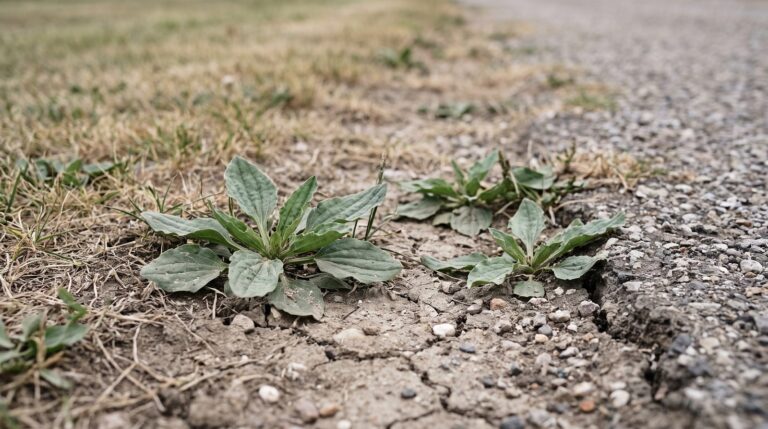
Pressure closes those pores. Feet, mowers, vehicles, children, dogs, and rain hitting bare soil. Clay compacts most easily and we have plenty of it.
Compacted soil means shallow roots, water running off instead of soaking in, and fertiliser sitting on the surface doing nothing.
That last point is why people feed a struggling lawn and see no result. The nutrients cannot get to roots that are not there.
How to check
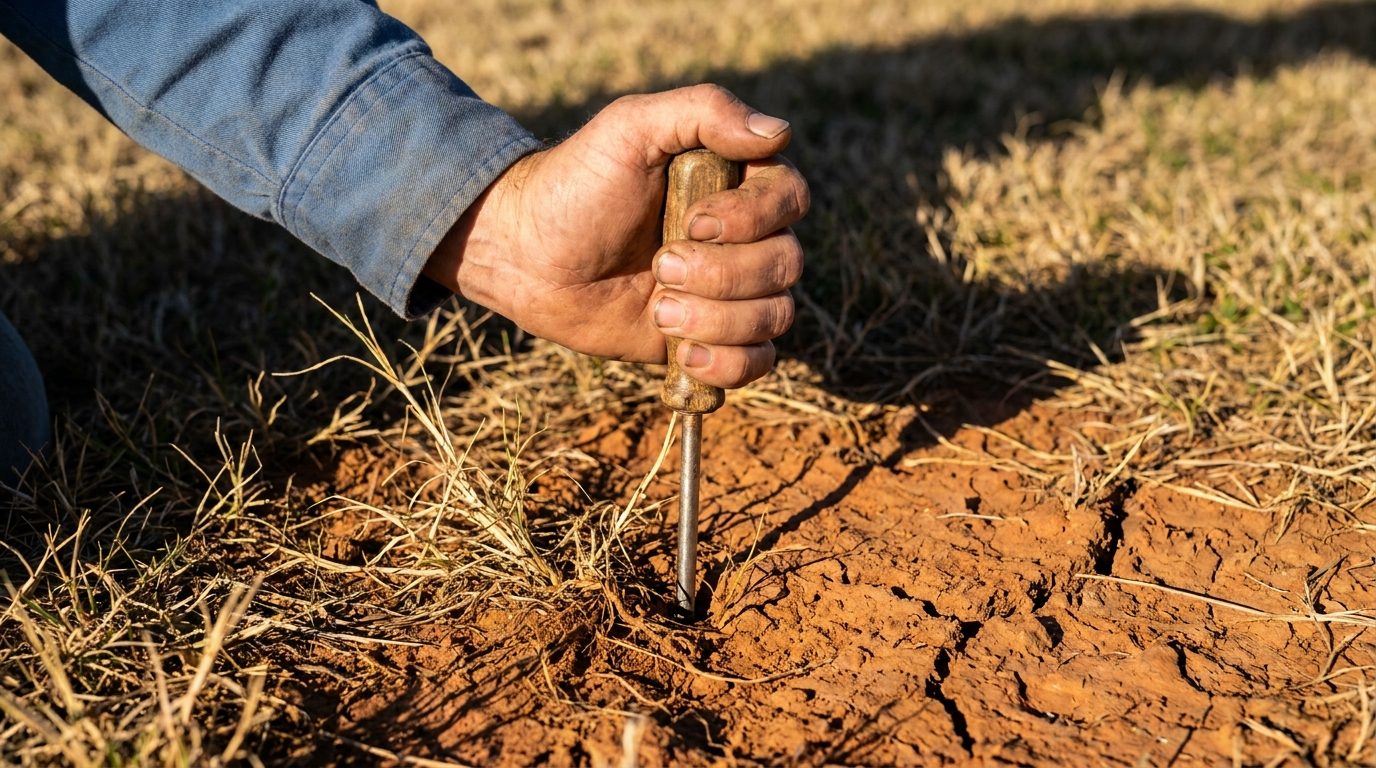
Push a screwdriver into the lawn when the soil is moderately moist. If it goes in six inches with light pressure, you are fine. If you have to lean on it, you are compacted.
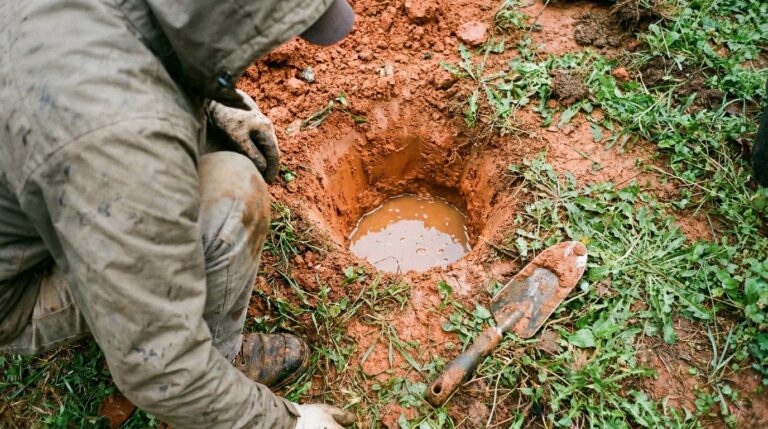
Or dig a small plug and look at the roots. Healthy warm season grass should have roots going down several inches. If they turn sideways at an inch and a half, they hit something.
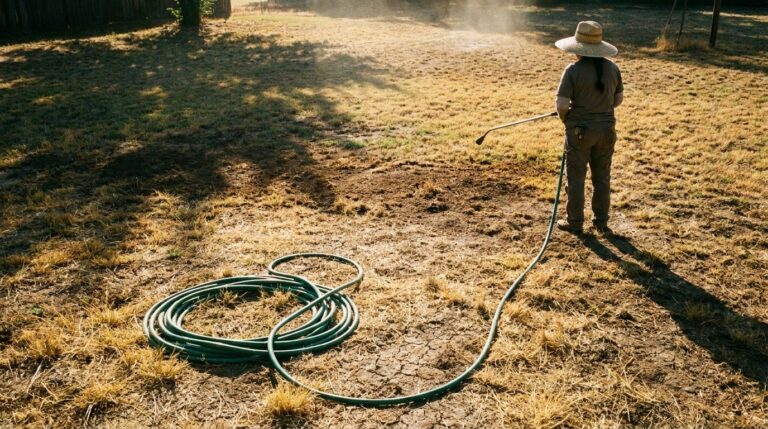
Water pooling or running off after a modest rain is another sign.
Core aeration, not spikes
There are two things sold as aeration and only one works.
Spike aerators push a solid tine into the ground and displace soil sideways, which compacts the soil around the hole. They make things worse.
Core aeration pulls out plugs of soil and removes them, leaving open holes. That is the one you want. The machine is a walk behind you can hire for a day.
Leave the plugs on the lawn. They look untidy for a week and then break down and top dress the surface.
Timing, and this is the part people get wrong
Aerate when the grass is actively growing and can recover quickly.
For warm season grasses in the south, which means St Augustine, centipede, zoysia and bermuda, that is late spring into early summer. After full green up and before the worst of the heat.
Do not aerate warm season grass in autumn or winter. It is going dormant, it cannot recover, and you have opened the soil up for winter weeds to germinate in.
This is the opposite of the advice you will read in national publications, which is written for cool season grass in the north, where autumn is correct. Applying northern timing down here does real damage and it is the single most common mistake I see repeated.
What to do at the same time
Top dress with a thin layer of compost, a quarter to half an inch, brushed in. The compost goes down into the holes and that is how you improve soil structure at depth without digging.
Overseed, if you have a grass that grows from seed, which bermuda and centipede do and St Augustine largely does not.
Fertilise, because the nutrients can now actually get down to the roots.
This combination, aerate then top dress then feed, does more for a tired lawn than anything else, and it costs a day of hire and some compost.
How often
Once a year for heavy clay or a lawn with a lot of traffic.
Every two or three years for lighter soil or a lawn nobody walks on.
Before you bother
Check that compaction is actually the problem. A thin lawn can also be shade, the wrong grass species, disease, insects, or simply not enough water.
Do the screwdriver test. If it goes in easily, the problem is something else and aerating will not fix it.
That is thirty seconds of checking and it has saved several of my customers the price of a day's machine hire.