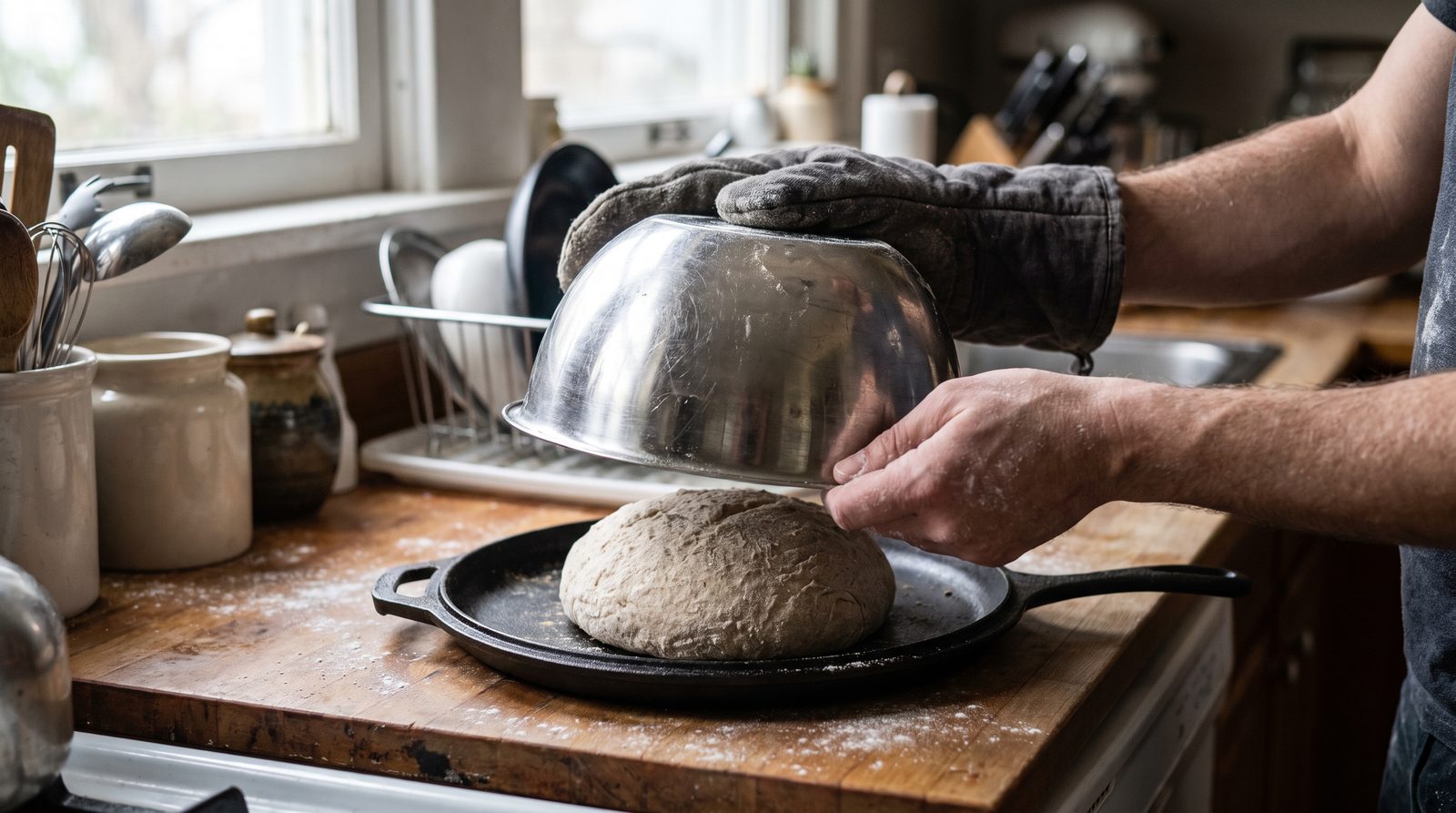
Baking a perfect loaf of sourdough in a cast iron skillet
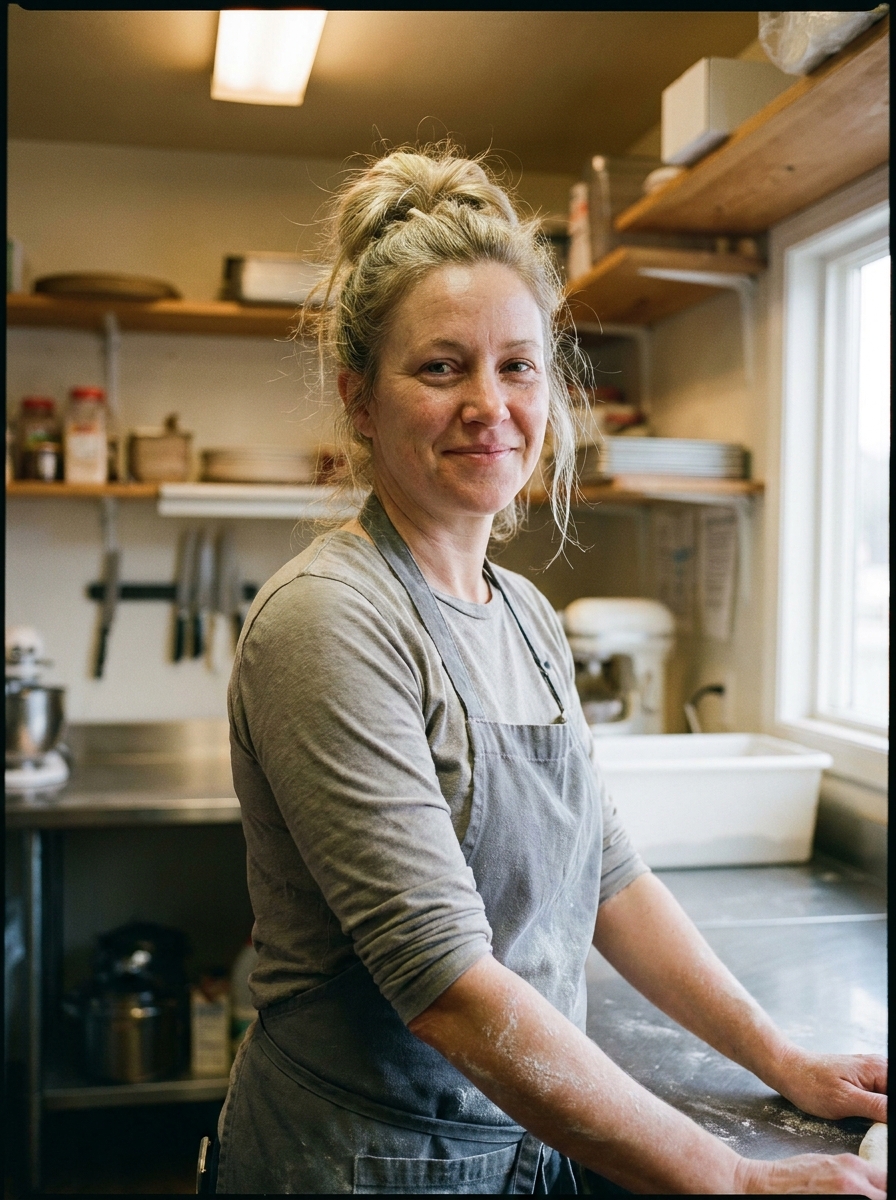
You do not need a Dutch oven. I have baked commercially for eleven years and I bake at home in a skillet with a bowl over it, and the loaf is the same.
What the pot is actually for
Steam. That is the only reason.
For the first part of the bake, a loaf needs a humid environment so the crust stays soft and the loaf can expand. That expansion is called oven spring and it is what gives you an open crumb.
Then you need dry heat to set and brown the crust.
A Dutch oven does this by trapping the loaf's own moisture, then you take the lid off. A skillet with something over it does exactly the same job.
The setup
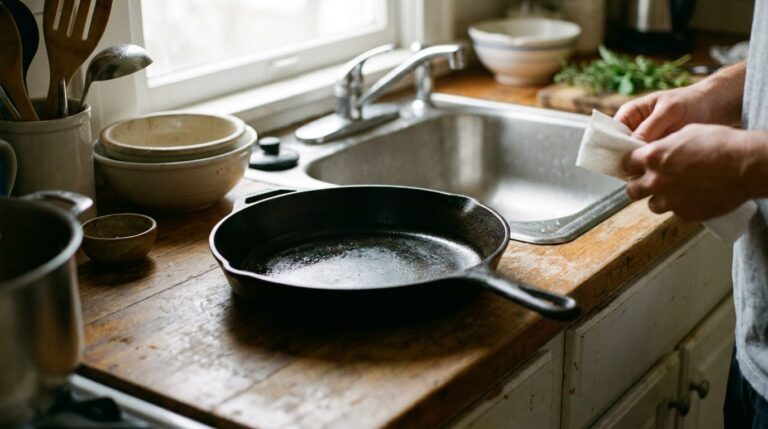
A cast iron skillet, ten or twelve inch, and something ovenproof to cover it. A stainless mixing bowl, a second skillet inverted, a roasting tin, a deep cake tin.
Whatever you use has to sit over the loaf with clearance for it to rise, an inch and a half at least, and it has to be metal or ovenproof ceramic. Not glass that is not rated for it, which can shatter.
The timing
Preheat the oven to 475 with the skillet inside for at least forty-five minutes. Long preheat, because cast iron takes a while to come to temperature all the way through and a cold spot in the pan means a pale bottom.
The cover can go in too or stay out. I leave mine out, because a cold cover condenses a little moisture and that is helpful.
Turn the loaf out onto parchment, score it, and get it into the hot skillet quickly. Cover.
Twenty minutes covered. Then remove the cover and another twenty to twenty-five minutes uncovered until it is properly dark.
Take it further than you think. A pale loaf is an underbaked loaf and the flavour is in the crust.
The things that go wrong
A burnt bottom. This is the main drawback of the skillet method, because cast iron holds a great deal of heat and the base of the loaf is in direct contact.
The fix is to slide a baking sheet onto the rack below, which shields it. Or bake on parchment with a little semolina underneath. Or drop the oven temperature by twenty-five degrees after the cover comes off.
Steam escaping. If the cover does not sit reasonably closely, you lose the humidity. A little escape is fine, a large gap is not.
Burning yourself. This is a genuine hazard and I say it from experience. You are handling a heavy cast iron pan at 475 degrees and lifting a hot bowl off a loaf mid bake.
Dry oven mitts, and a plan for where the hot cover is going before you lift it. A wet cloth on a hot handle transmits heat instantly, which is the burn most people get.
The shape
A skillet gives you a round loaf, a boule, and it constrains the spread, which is useful for a slack dough.
If your dough is very wet and tends to flatten, the skillet walls hold it up and you get more height than you would on a stone.
What I actually do
Twelve inch skillet, stainless bowl over the top, oven at 475, twenty minutes covered and twenty-two uncovered, with a sheet pan on the rack below from the moment the cover comes off.
I have used the same skillet since 2016 and it is also the pan I fry eggs in, which some people find objectionable and which has never caused a problem.
Bread is flour, water, salt and time. The equipment is the least important part of it, and anyone who tells you otherwise is selling something.