How to cut your grass in high heat without killing it
In July and August down here, mowing wrong will do more damage to a lawn than not mowing at all.
I run a two man crew in Baton Rouge and most of the burned out lawns I am called to look at in late summer were burned out by their owner with a mower.
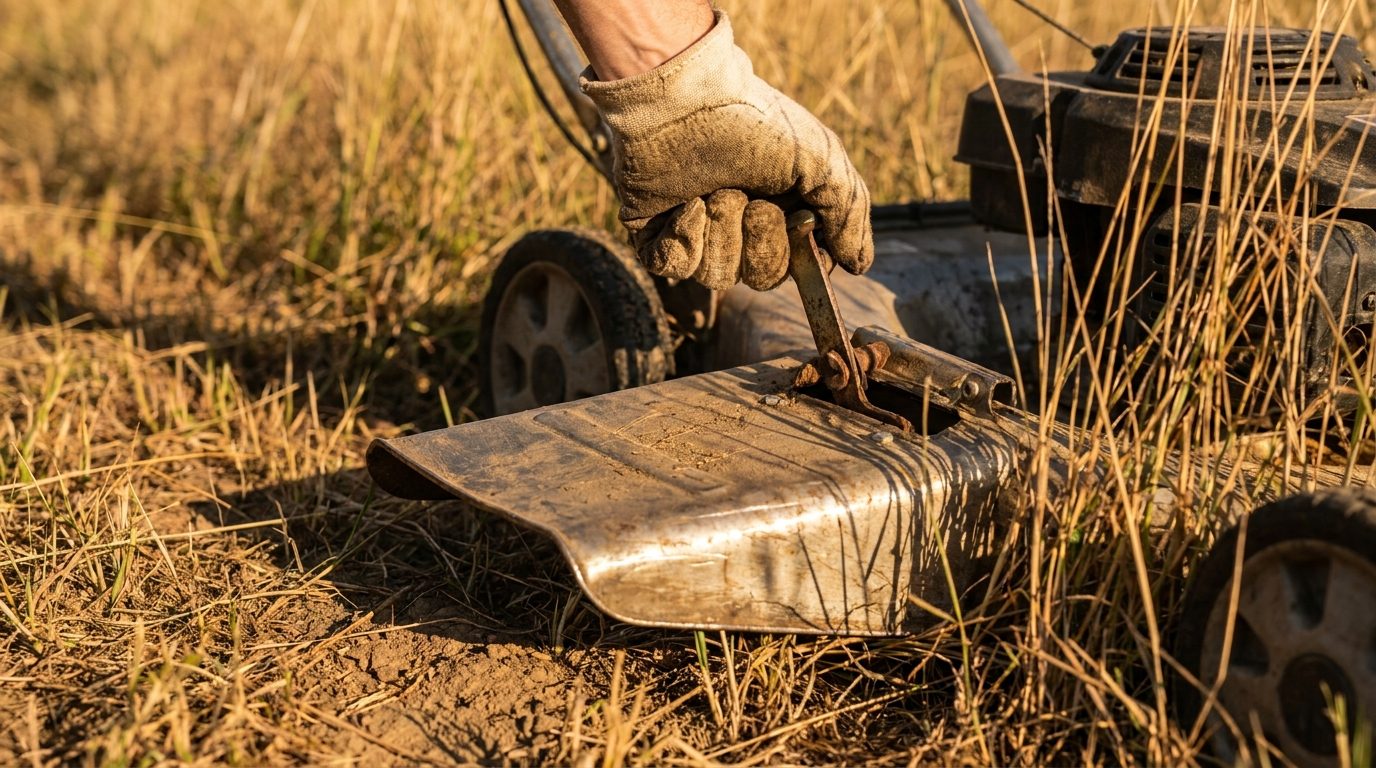
Raise the deck
This is the single most important thing.
Taller grass shades its own soil, which keeps the root zone cooler and holds moisture. Taller grass also has a deeper root system, because top growth and root depth are related.
Cut short in heat and you expose the soil, it dries and heats, and the roots that are left are shallow and cannot reach water.
Raise the mower by a notch or two for the summer. For St Augustine that means three and a half to four inches. Centipede about two. Zoysia two to two and a half. Bermuda can go lower and it will still benefit from being a little higher in August than in May.
The one third rule
Never remove more than a third of the leaf blade in a single cut.
Take off more than that and the plant has to spend stored energy regrowing leaf instead of maintaining roots, and in heat it does not have that energy to spare.
If the grass has got away from you, do not cut it back to target in one go. Cut a third, wait three or four days, cut again.
This means mowing more often in the growing season, not less, which people find counterintuitive.
When to mow
Early morning after the dew has dried, or late afternoon. Not the middle of the day.
Midday mowing stresses the plant when it is already stressed, and it stresses you, which matters more than people admit. Heat illness is a real risk and I have had crew go down from it.
Never mow a lawn that is wilted or showing footprints that stay. That grass is already under water stress and cutting it adds injury to it.
Never mow wet grass. It tears rather than cuts, it clumps, and it spreads fungal disease.
Sharp blades
A dull blade tears the leaf instead of cutting it, and a torn leaf loses more water and is an open door for disease.
Look at the grass a day after mowing. If the tips are white or brown and frayed, the blade is dull.
Sharpen at least twice a season. I sharpen more often than that because we hit a lot of sand.
Leave the clippings
Mulch them back in. They are mostly water and nitrogen, they break down quickly, and they return a meaningful amount of fertiliser to the lawn.
They do not cause thatch. That is a persistent myth and thatch comes from stems and roots, not clippings.
The only time to bag is if the grass got very long and is clumping, or if there is active disease you do not want to spread.
The things that compound the damage
Fertilising in high heat, which pushes growth the plant cannot support and can burn it outright. Feed in late spring and early autumn, not in August.
Herbicide in high heat, which damages stressed turf and which many labels prohibit above a certain temperature. Read the label.
Watering lightly and often, which keeps roots shallow. Deep and infrequent, early in the morning.
Driving and parking on it, which compacts wet soil and kills it in the shape of your tyres.
What I tell people
If it is a hundred degrees and the lawn is stressed, the best thing you can do is nothing.
Skip the mow. Water deeply once, early. Wait for the weather to break.
A lawn that is dormant and a little shaggy in August recovers in September. A lawn that was scalped in August frequently does not.