How to keep your kitchen warm when it is freezing outside
A kitchen is usually the coldest room in an old house, and there are reasons for that which have nothing to do with the heating system.
I am up at four in the morning eleven months of the year in Duluth, so I have thought about this more than is reasonable.
Why kitchens are cold
Plumbing on exterior walls, which means the wall behind the sink often has less insulation than anywhere else, and sometimes none, because the pipes are in it.
Extractor fans and range hoods, which vent to outside and which, when not running, are a hole in your wall with a flap over it. That flap is frequently stuck open or missing entirely.
Doors to the outside, because kitchens often have one.
Hard surfaces. Tile and stone floors on an unheated crawl space or slab, which conduct heat out of your feet all day.
And in many houses, being at the end of the duct run, so the air arriving is already cooler than what reaches the living room.
Things to check first
Go to the range hood and look at the damper. Put your hand near it on a cold windy day. If you feel air, it is stuck open. Cleaning the grease off the flap fixes most of them, and a backdraft damper costs very little to add.
Check the same on any bathroom or laundry vent nearby.
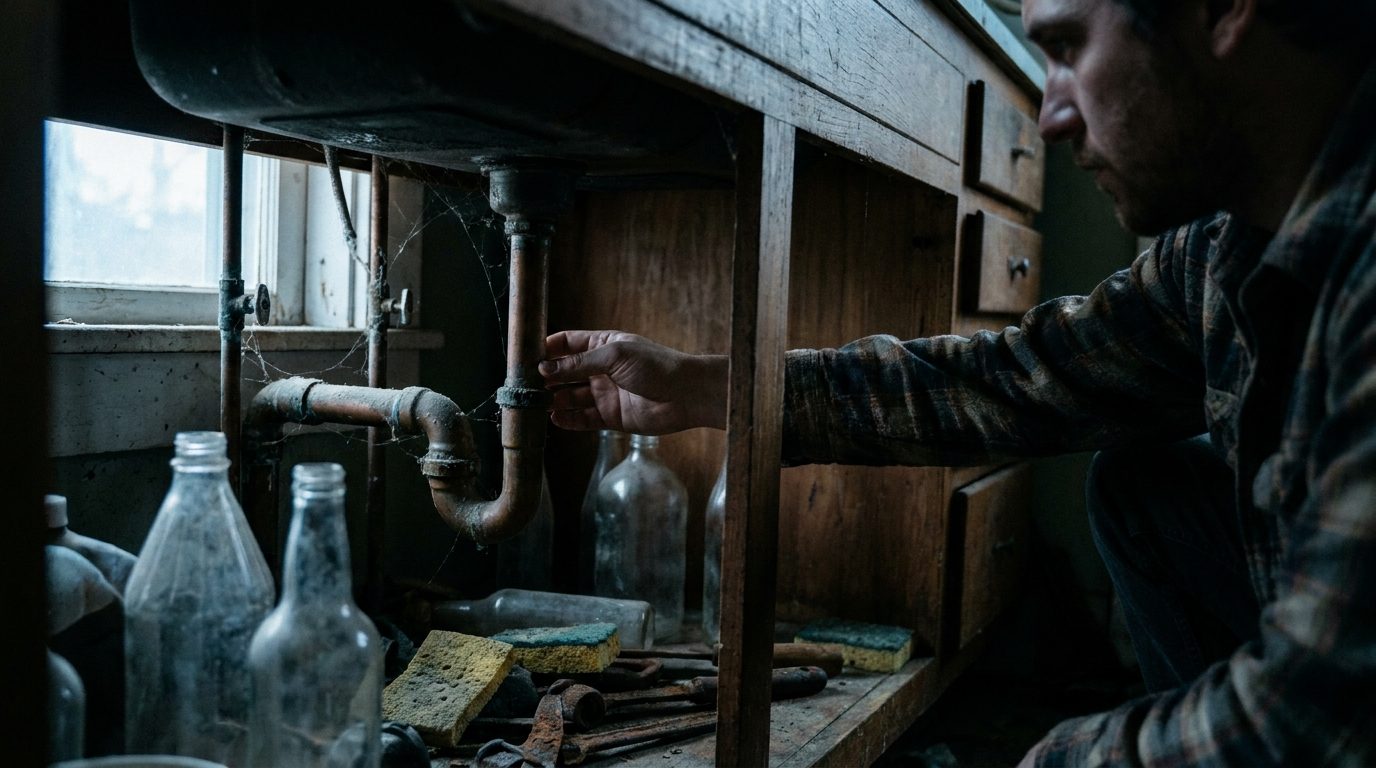
Then the sink cabinet. Open the doors under the sink and feel. If it is noticeably colder in there, cold is coming through the wall penetrations around the pipes. Spray foam around the pipe holes, and if the back of the cabinet is bare exterior wall, a sheet of rigid foam board cut to fit behind makes a real difference.
In very cold weather, leave those cabinet doors open overnight so warm room air reaches the pipes. That is a freeze prevention measure as much as a comfort one.
Then the window. Kitchen windows are often old, often single glazed, and often over a sink where you stand. Plastic film insulation kits are genuinely effective and they cost almost nothing, and a heavy curtain at night on any window helps.
The floor
A rug where you stand. This is the single most effective comfort improvement in a cold kitchen and it costs the price of a rug.
An anti fatigue mat at the sink and the stove does double duty, insulating and saving your back. I have stood on one for eleven years and I would not work without it.
If the floor is over a crawl space and it is cold underfoot everywhere, the insulation below is the real fix, and it is a bigger job.
Using the cooking
An oven at 350 for an hour puts a substantial amount of heat into a room and it is heat you were producing anyway.
So bake in the morning if you are baking, and leave the oven door open after you turn it off to let the residual heat out into the room rather than up the vent.
Do not use a gas oven as a heater with the burner running and the door open. That is a carbon monoxide risk and it kills people every winter. Residual heat from an oven you have turned off is a different thing entirely and it is fine.
Run the range hood only as long as you need it. It pulls out the warm air along with the steam.
The things that are worth money
Weatherstripping on the exterior door, which is a twenty minute job.
Door sweep at the bottom, same.
Outlet and switch gaskets on exterior walls, which sound trivial and which collectively add up in an old house.
A small radiant heater under the counter or an electric toe kick heater, if the room is used for hours at a time.
What I would not bother with
Heated floors retrofitted into an existing kitchen, unless you are already taking the floor up. The cost is not justified by comfort alone.
Space heaters running all day, which are expensive to run and which are the leading cause of home heating fires. If you use one, keep it clear of everything, plug it directly into the wall, never into an extension lead, and turn it off when you leave the room.
That last rule is not negotiable, and in a kitchen full of tea towels and paper it matters more than anywhere else in the house.