Keeping your garden alive during a dry August
August here is not the hottest month by much and it is the hardest, because the plants have been working since April and the ground has been drying since June.
The decisions you make in the first week of August determine what is alive in September.
Triage first
You will not water everything properly. Accept it and decide what gets the water.
First priority: anything planted this year or last. New plantings have shallow roots and no reserves, and they die first and permanently.
Second: containers, which have no soil volume to buffer them and which can go from fine to dead in a day.
Third: vegetables that are actively fruiting, and anything you have invested real money in.
Fourth: established shrubs and trees, which mostly do not need it.
Last: lawn, which does not need it at all.
Write that order down before the heat arrives, because in the middle of a dry spell people water what looks worst, and what looks worst is often the thing that will recover anyway.
How to water so it counts
Deeply and rarely. An inch of water once a week does far more than a light sprinkle daily, because a light sprinkle wets the top inch and encourages roots to stay there, where they are most vulnerable.
Early morning. Not evening, because of fungal disease, and not midday, because of evaporation.
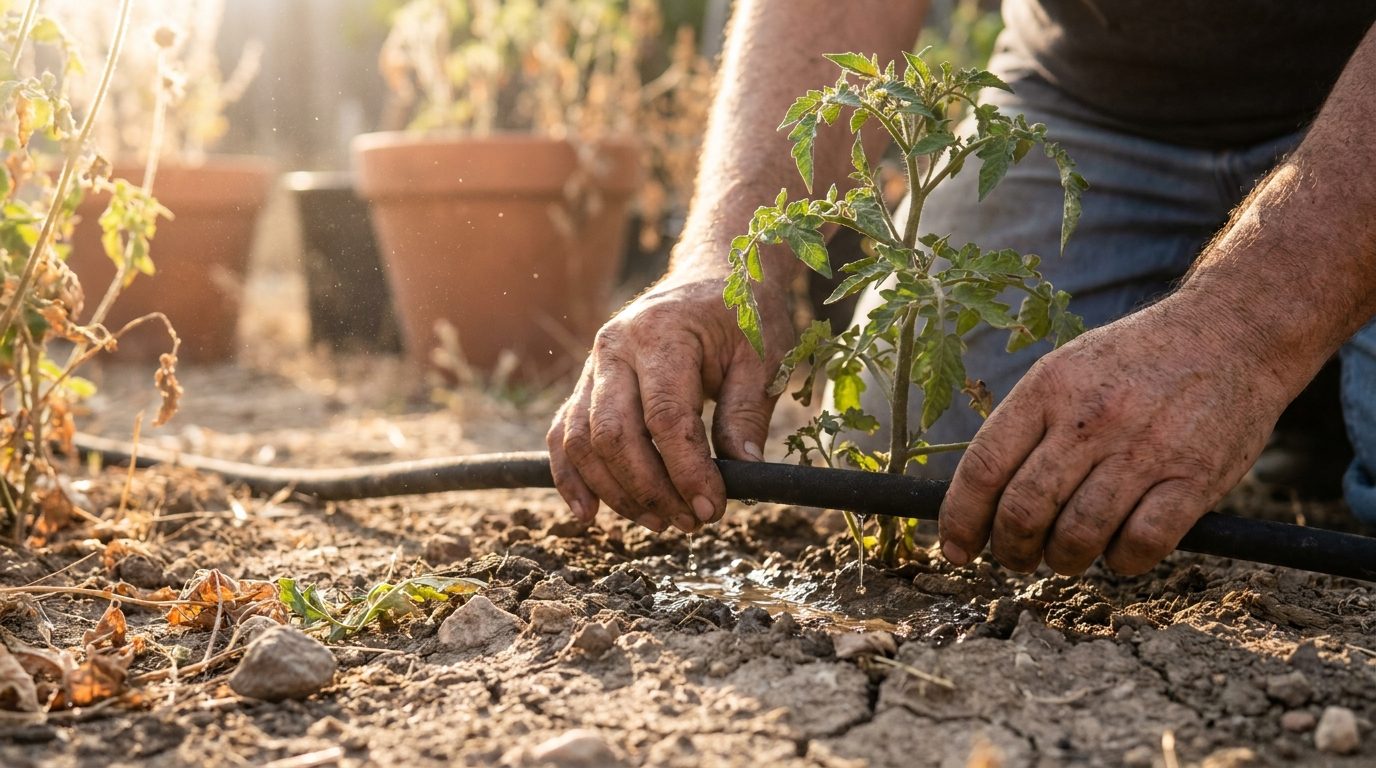
At the roots, not on the leaves. A soaker hose or drip line is the single best investment for a southern garden, and it uses far less water than a sprinkler.
Measure it. Put an empty tuna tin under the sprinkler and run it until there is an inch in the tin. Time it. Now you know. Almost nobody does this and almost everybody waters less than they think.
Check what actually got wet. Dig down four inches an hour after watering. If it is dry at that depth, you did not water enough, and that is extremely common.
Mulch, properly
Two to three inches, on top of moist soil, kept back from stems and trunks.
Mulch is worth more in August than anything else. It cuts evaporation substantially, keeps the soil cooler, and suppresses the weeds that would otherwise be competing for the water.
Do not mulch dry ground. Water first, then mulch, or you have insulated the drought in.
Stop doing things
No fertiliser. Feeding pushes soft growth that needs water you do not have, and fertiliser salts in dry soil damage roots.
No pruning, except removing dead material. Pruning stimulates growth.
No planting. Wait for September, which is the best planting month in the south and which nobody uses.
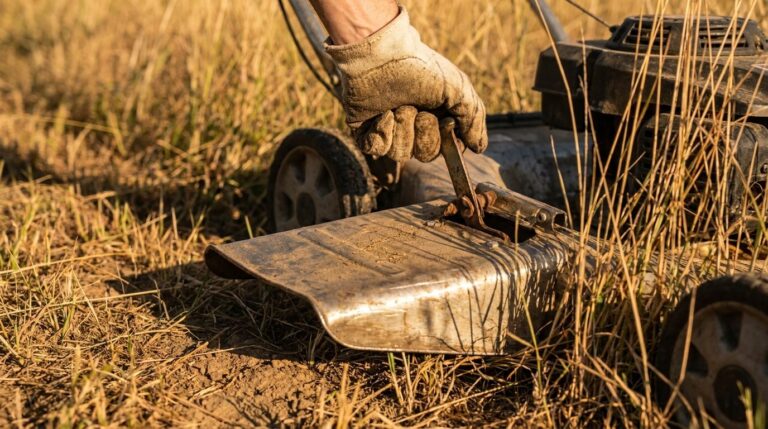
No lawn feeding, and raise the mower. Longer grass shades its own roots.
Let the lawn go
This is the hardest advice to follow and the most important.
Cool season grass goes dormant and brown in a dry August. It is not dead. It is doing exactly what it evolved to do, and it will green up when the rain returns.
Watering a lawn enough to keep it green through a southern August uses an extraordinary amount of water for an entirely cosmetic result, and it is water your shrubs would use better.
Containers
Check them daily. Twice on the worst days.
Move them into afternoon shade if you can, even permanently for the rest of the season.
Group them together, which raises humidity around them and shades the pots.
Consider saucers in August specifically. I spend most of the year telling people to empty saucers and in a heatwave a container plant benefits from the reservoir.
If something wilts in the afternoon
Do not panic and do not water immediately.
Many large leafed plants wilt in afternoon heat as a water conservation measure and recover by morning. Hydrangeas do it constantly and it alarms people every year.
Check again at seven in the morning. If it is still wilted then, it needs water. If it has recovered, it was managing itself and you would have been watering a plant that did not ask for it.