Why zone 7a spring weather is so frustrating for gardeners
Zone 7a tells you one thing: the average annual minimum temperature is somewhere between zero and five degrees Fahrenheit. That is all it tells you, and it is not the number that ruins your spring.
The number that ruins your spring is the last frost date, and in the southern mountains it is a liar.
Why it happens here
The warm spell arrives in February. Ten days of sixty-five degrees and everything breaks dormancy. The forsythia goes, the maples flower, the peaches think it is April.
Then a cold air mass drops down and there is a hard freeze on the eighth of April.
This is the defining pattern of gardening in the southern Appalachians and it is worse here than in colder zones, because a garden in zone 5 does not get tempted in February. Ours does, every year, and gets caught about two years in three.
The late freeze does more damage than winter ever does, because winter damage happens to dormant tissue and April damage happens to open flowers and soft new growth.
The average frost date is an average
Look up the last frost date for your area and you get a date, typically somewhere in April around here depending on elevation.
That is a fifty percent probability. Half the years it frosts after it.
If you want ninety percent confidence, you are looking at two to three weeks later. Most extension services publish the probability table, not just the single date, and that table is far more useful than the date everyone quotes.
Elevation makes it local
This is the part that makes regional advice close to useless here.
Five hundred feet of elevation is worth a couple of degrees, and in mountain country you can have that difference between one side of a town and the other.
Cold air is heavy and flows downhill, pooling in hollows and valley bottoms. A garden at the bottom of a slope will frost when a garden a hundred feet up the same slope does not. These are called frost pockets and if you have one you will learn it quickly.
South facing slopes warm earlier, which sounds good and is mostly a liability, because it encourages early growth into exactly the period when frost is still coming.
What I actually do
I do not plant anything tender until the first week of May, whatever February suggests. I have broken this rule and paid for it enough times to stop.
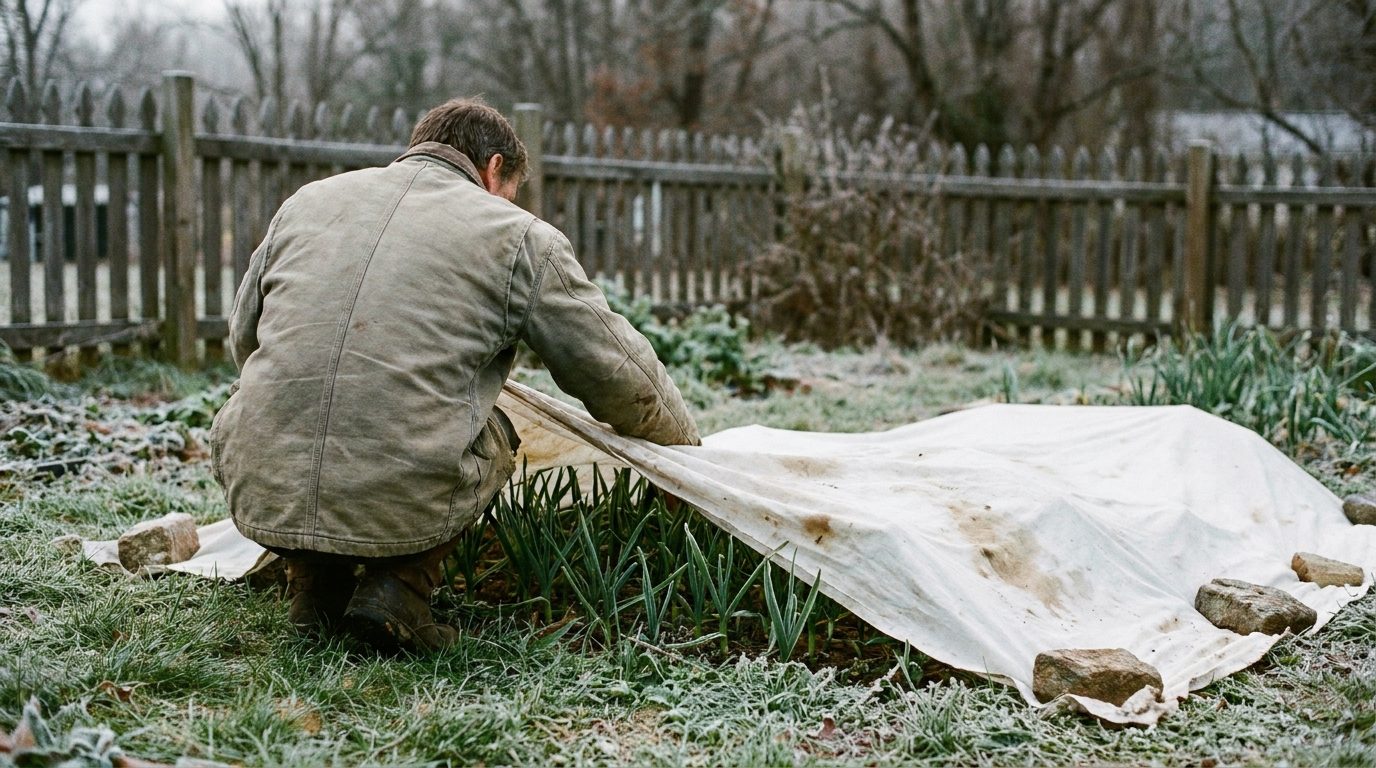
I keep row cover and a stack of old sheets by the back door from March to May. Covering works, and it works because it traps heat radiating from the ground, which means the cover has to reach the ground. A sheet draped over a plant like a tent and tied at the stem does nothing.
Take covers off in the morning. Left on in sun they cook things.
Water the ground the evening before a frost. Moist soil holds and releases more heat than dry soil, and it can be worth a degree or two.
I do not fertilise early. Feeding in February pushes soft growth that is exactly what freezes.
Fruit is the real casualty
Peaches, apricots and early flowering cherries lose crops here regularly. The flowers open in the warm spell and freeze.
If you are planting fruit, choose late blooming varieties and site them on a north facing slope or somewhere shaded in the morning, so they warm slowly and bloom later. Delaying bloom by a week is worth more than any protection you can apply afterwards.
What I would tell somebody new here
Ignore the zone for spring planting. It governs what survives your winter, not when you can plant.
Find out the last frost probability table for your elevation, not your town.
Watch where the frost sits in your own garden on a cold morning in March. That map is worth more than anything I can tell you, and it takes one season to make.
And accept that you will lose things. I have gardened here thirty years and I lost the hydrangea flowers in 2023 and most of the figs the year before. It is the price of a climate where February pretends to be spring.