
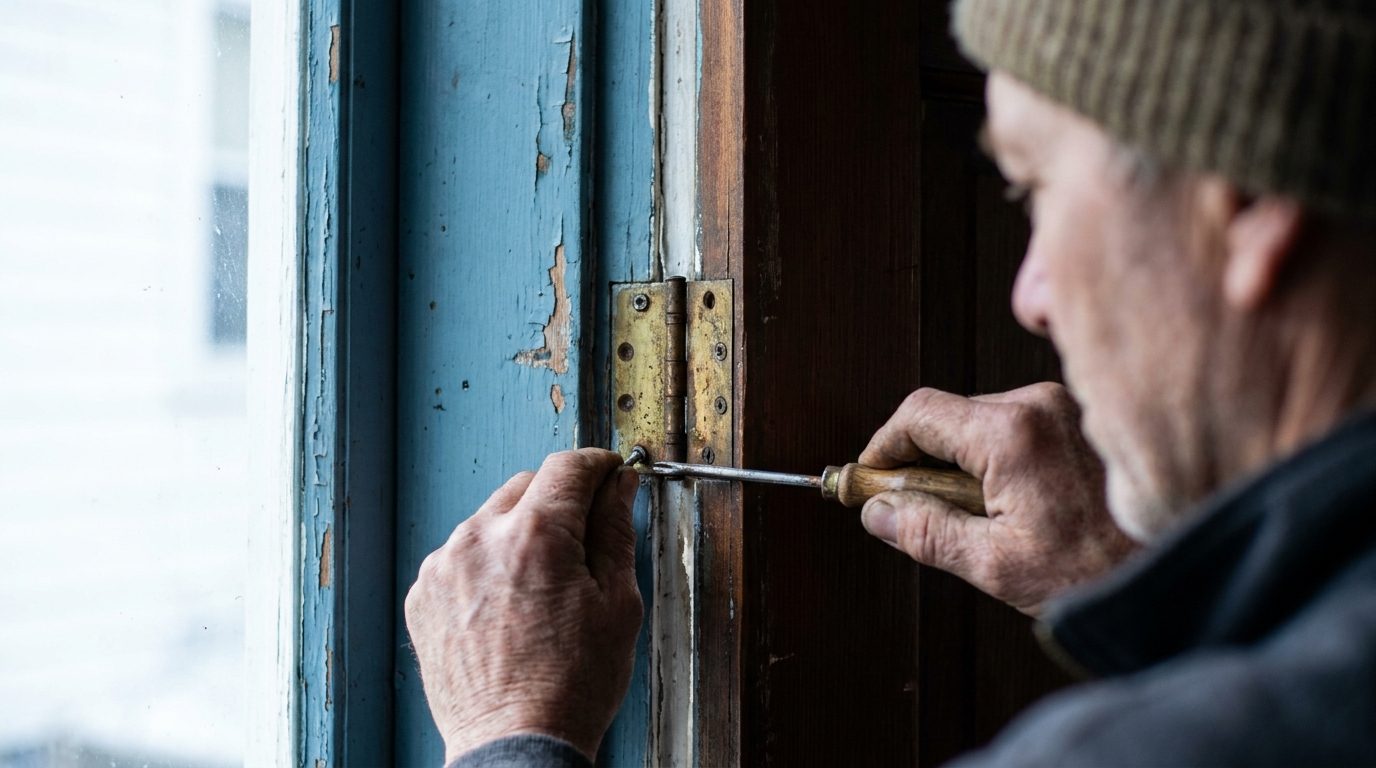
How to fix a wooden door that sticks in the winter
Before you touch a plane, work out why it is sticking. Half the doors I have been called to fix did not need any wood removed at all.
Find out when
If it sticks only in winter, that is not swelling. Wood shrinks in winter, when the air is dry.
Winter sticking is usually the house moving. Frost heave under a foundation, or the frame settling as the ground freezes, and the door binds because the opening has changed shape.
Summer sticking is swelling. Humidity, and the door takes up moisture and grows.
If it sticks all year, it is hinges, or the door has dropped, or it was never hung properly.
Those are three different repairs and planing is the right answer to only one of them.
Check the hinges first
This takes five minutes and fixes a surprising proportion of sticking doors.
Take the door in your hand at the handle edge and lift. If there is play, the hinges are loose or worn.
Tighten every screw. If a screw spins without biting, the hole is stripped. Remove it, glue in a couple of matchsticks or a wooden dowel, let it set, and drive the screw again into fresh wood.
Use longer screws in the top hinge, three inches, going through the frame into the stud behind. That single change pulls a sagging door back up and fixes a door that catches at the top corner on the latch side.
Look at where it rubs
Shut the door slowly and watch. Run a piece of paper around the gap and find where it grips.
Shiny marks or bare wood show you the spot.
Top of the latch side means the door has dropped. Hinges.
Bottom of the latch side means the top hinge is pulling out or the frame has moved.
The latch edge all the way down suggests swelling or a frame that has narrowed.
The hinge side binding means the hinges are mortised too deep or the door is set too far into the rebate.
Things to try before planing
Shim behind a hinge. A piece of card behind the hinge leaf on the frame side moves the door across by a fraction, and that is often all it needs. Behind the bottom hinge to move the top of the door away, behind the top hinge for the reverse.
Deepen a hinge mortise slightly, which does the opposite.
Adjust the strike plate, if the problem is that the latch does not meet it. Move it, or file the hole slightly.
Dry the room. A dehumidifier in a damp house shrinks a swollen door back, and if the door then fits all winter and sticks all summer, the humidity is the actual problem and you should fix that rather than the door.
If you must plane
Take the door off and work on a bench or trestles. Planing a hanging door is how you take off too much.
Mark the line with a pencil, and take less than you think. You can always take more.
Plane the hinge edge rather than the latch edge if you have the choice, because the hinge edge is easier to disguise and the latch edge needs the gap to stay even.
Work from the ends toward the middle on the top and bottom edges, so you do not tear out the corner.
And seal what you expose. Bare wood takes up moisture faster than sealed wood, which means the door you planed in July swells more in August. Prime and paint the edge, including the top edge, which nobody does and which is where most of the moisture gets in.
The one people forget
The top edge of an exterior door and the bottom edge are frequently unpainted, because nobody looks at them. That is where the water goes in.
If you have a door that swells every summer, take it off, seal all six surfaces properly, and the problem is often simply gone. It costs an afternoon and no wood at all.