How to measure and cut baseboards without wasting wood
Most of the waste I see on a baseboard job comes from two things: cutting before thinking about the order, and trusting that the corners are square.
They are not square. No corner in any house I have worked in over forty-one years has been exactly ninety degrees.
Plan the room first
Before any cutting, walk the room with a pad and sketch it. Number each wall.
Measure every wall and write it down. Then look at your stock and work out which length goes where, longest pieces first, so the offcuts from long walls become the short pieces beside doorways.
Do that on paper and you will use noticeably less material. Cut as you go around the room and you will end up with a pile of pieces that are all slightly too short for anything.
The two kinds of joint
Inside corners should be coped, not mitred. This is the thing that separates a job that stays tight from one that opens up.
A mitred inside corner relies on the wall being square and on the wood not moving. Neither is true. When the house shifts and the timber shrinks in winter, a mitred inside corner opens into a visible gap.
A coped joint has one piece cut square into the corner and the second piece cut to the exact profile of the first, so it sits against the face. It moves without opening, and it forgives a corner that is out of square.
Outside corners are mitred, and they are where you need the actual angle rather than assuming forty-five.
Get the real angle
Buy an angle finder, or use a bevel gauge and a protractor.
Measure the corner, divide by two, and set the saw to that. A corner that is ninety-three degrees needs two cuts at forty-six and a half, and cutting two forty-fives into it leaves a gap you will be filling with caulk forever.
On long walls, check whether the wall bows. A bowed wall means the board will not sit flat and you need to plan where to fasten to pull it in.
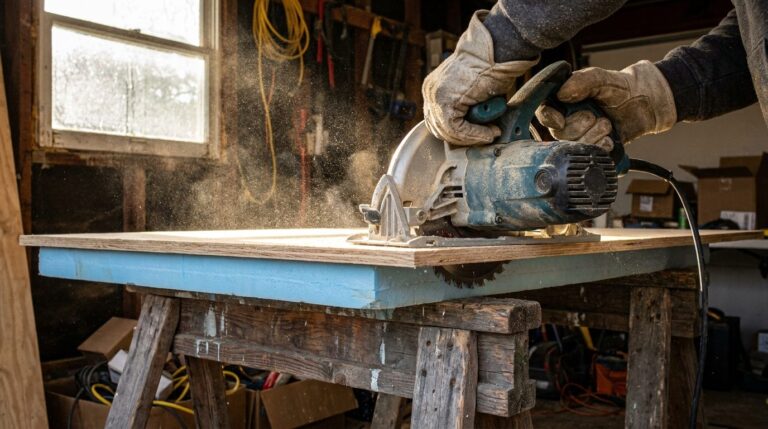
Cutting
Measure to the outside of the board for an outside corner and to the inside for an inside one, and say out loud which one you are doing before you cut. That sounds foolish and it stops the most expensive mistake.
Cut long. Always. A sixteenth of an inch long can be trimmed. A sixteenth short is firewood.
Test fit every piece before fastening. Every single one.
For pieces that fit between two walls, cut a fraction long and spring it into place. The slight bow holds it tight against both ends.
Long runs
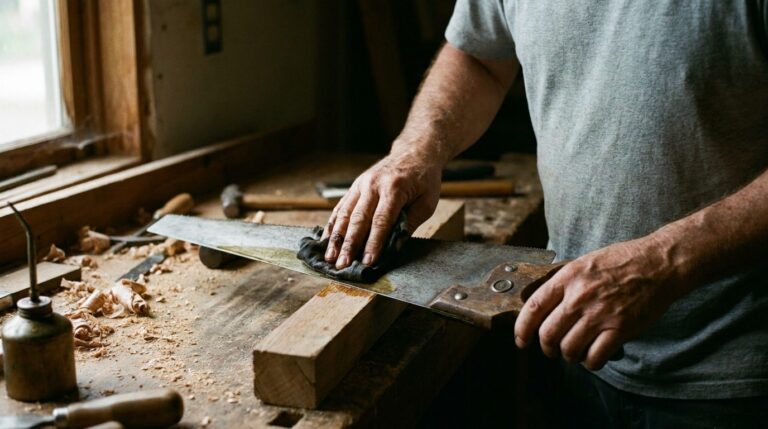
Joining two lengths in the middle of a wall is done with a scarf joint, two opposing forty-five degree cuts overlapping, not two square ends butted together.
A butt joint opens with any movement and it is visible from across the room. A scarf joint stays closed because the overlap hides the movement.
Put the scarf joint over a stud so both pieces are fastened, and place it away from the main sight line into the room.
Practical points
Paint or stain before installing, at least the first coat. Touching up afterwards is much less work than cutting in against a finished wall.
Leave a small gap at the bottom if flooring is going in later, and know what thickness.
Nail into studs where you can. Find them first and mark them with tape above the line so the marks are still visible while you work.
And keep the offcuts until the entire room is finished. Every time I have cleared up early I have needed a piece I threw away an hour before.
The thing I say too often
Measure twice. My children are tired of hearing it and it is still the correct advice, and on a baseboard job I would add: measure twice, cut long, and cope your inside corners.