Why bluegrass will never survive in a southern lawn
People move down here from Ohio, look at the thin patchy grass everyone has, and decide they are going to have a proper lawn. They buy Kentucky bluegrass seed. By August it is gone.
It is not the soil and it is not the watering. It is that the grass is the wrong species for the climate, and no amount of care fixes a species problem.
Cool season and warm season
Grasses fall into two groups and they work in opposite directions.
Cool season grasses, which include Kentucky bluegrass, tall fescue and perennial ryegrass, grow actively in spring and autumn. They do their best work when the air is between sixty and seventy-five degrees. In summer heat they go dormant or die.
Warm season grasses, which include bermuda, zoysia, St Augustine and centipede, grow when it is hot. Their best range is eighty to ninety-five. They go dormant and brown in winter, which people down here accept as normal.
Baton Rouge in July is not a place where a cool season grass is doing anything except suffering.
What actually kills it
Heat, first. Root growth in bluegrass essentially stops above about eighty degrees soil temperature. Our soil goes well past that and stays there for months.
Humidity plus heat, second, and this is the one that finishes it. Brown patch and pythium are fungal diseases that thrive in exactly our conditions, and a stressed cool season grass has no resistance to them. A lawn can go from struggling to gone in a week in August.
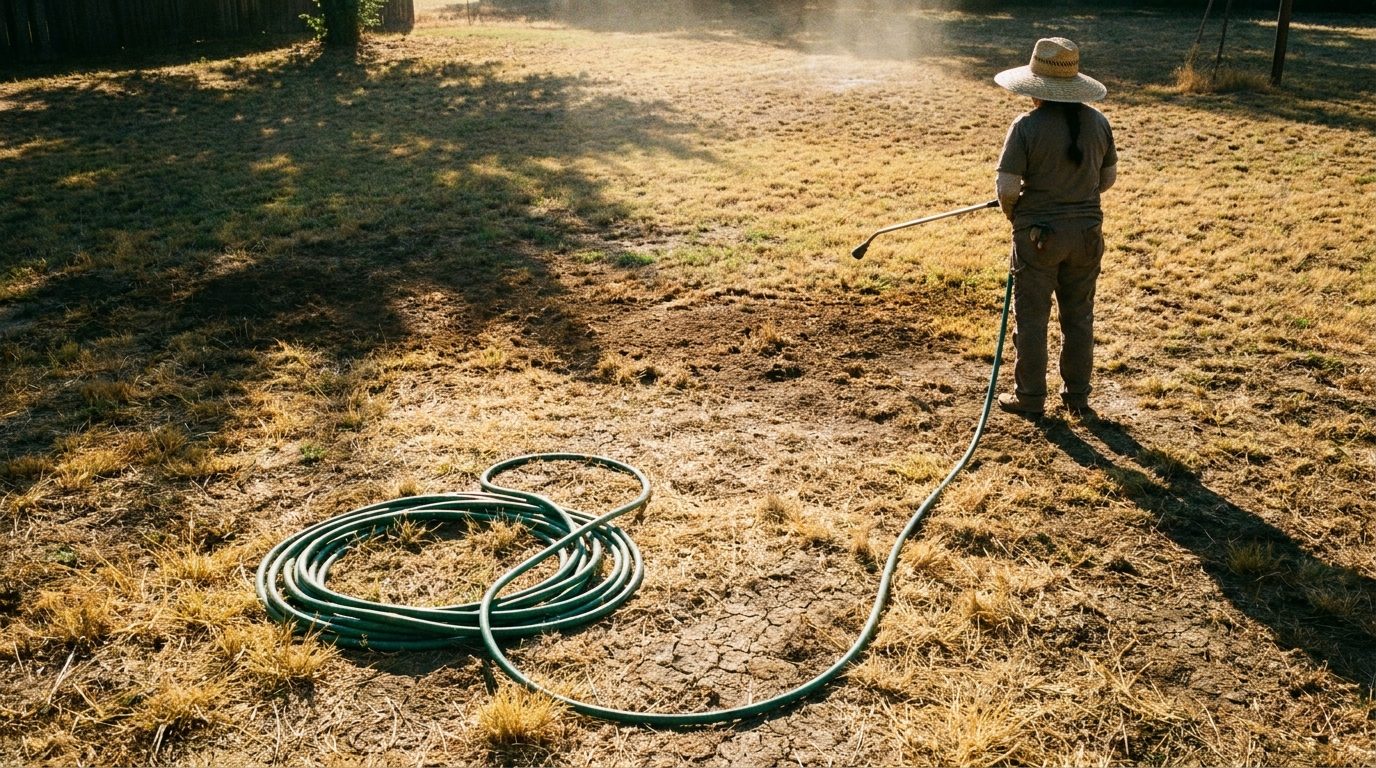
Watering more makes the disease worse, which is the trap. The lawn looks like it is dying of drought and the owner responds by creating perfect conditions for the fungus.
And the transition zone problem. There is a band across the middle of the country where neither type is really happy. We are south of it. Up there people fight this argument every year. Down here it is settled.
What to plant instead
St Augustine, which is the default around here for a reason. It handles heat and humidity, it tolerates some shade, which most warm season grasses do not, and it makes a thick turf. It does not tolerate heavy traffic well and it needs more water than centipede.
Centipede, which is the low input choice. Slow growing, low fertility requirement, and it genuinely suffers if you fertilise it heavily, which is the opposite of what people expect. If you want to mow less and feed less, this is your grass.
Zoysia, which makes an excellent dense lawn, handles traffic, and is slow to establish and more expensive.
Bermuda, which is the toughest and the most traffic tolerant, needs full sun, and will invade your flower beds relentlessly.
Choose on shade and traffic. Full sun and children playing, bermuda or zoysia. Some shade, St Augustine. Low effort, centipede.
The winter brown
Warm season grass goes dormant and brown after the first hard frost and greens up in spring. That is healthy and normal.
People overseed with ryegrass in autumn for winter colour. It works and I would think carefully about it, because the ryegrass competes with your warm season grass in spring exactly when it is trying to come out of dormancy.
If green in January matters to you, overseed. If a strong lawn in July matters more, do not.
What I tell customers
If you have moved from the north, the lawn you had is not available here. That is not a failure of effort.
Plant the grass that belongs in this climate, accept that it will be brown for part of the winter, and you will have a better lawn with less work than you ever had up there in August.
And the fescue that the big box store is selling in September, in Louisiana, is being sold to people who will buy it again next September.