What killing fifty houseplants taught me about watering
I am a master gardener of thirty years standing and I killed a great many houseplants before I understood what I was doing wrong. The number in the title is conservative.
Almost all of them died of the same thing, and it was not neglect.
Overwatering is not about volume
This is the thing that took me years to understand.
Overwatering does not mean too much water at once. It means watering too frequently, so the soil never dries and the roots never get air.
Roots need oxygen. Constantly wet soil has no air in it, the roots suffocate and rot, and a rotted root cannot take up water.
So the plant wilts. It looks thirsty. You water it. It gets worse. That loop has killed more houseplants than drought ever has.
The signs are almost identical
Wilting, drooping, yellowing lower leaves, brown crispy edges. Both too much and too little produce all of them, which is why guessing does not work.
The reliable distinguishers.
Too much water: the soil is damp, the stem is soft or mushy at the base, there is a sour smell, leaves yellow before they droop, and if you tip it out the roots are brown and fall apart.
Too little: the soil has pulled away from the pot, the pot is light, the leaves are crisp rather than limp, and the roots are pale and firm.
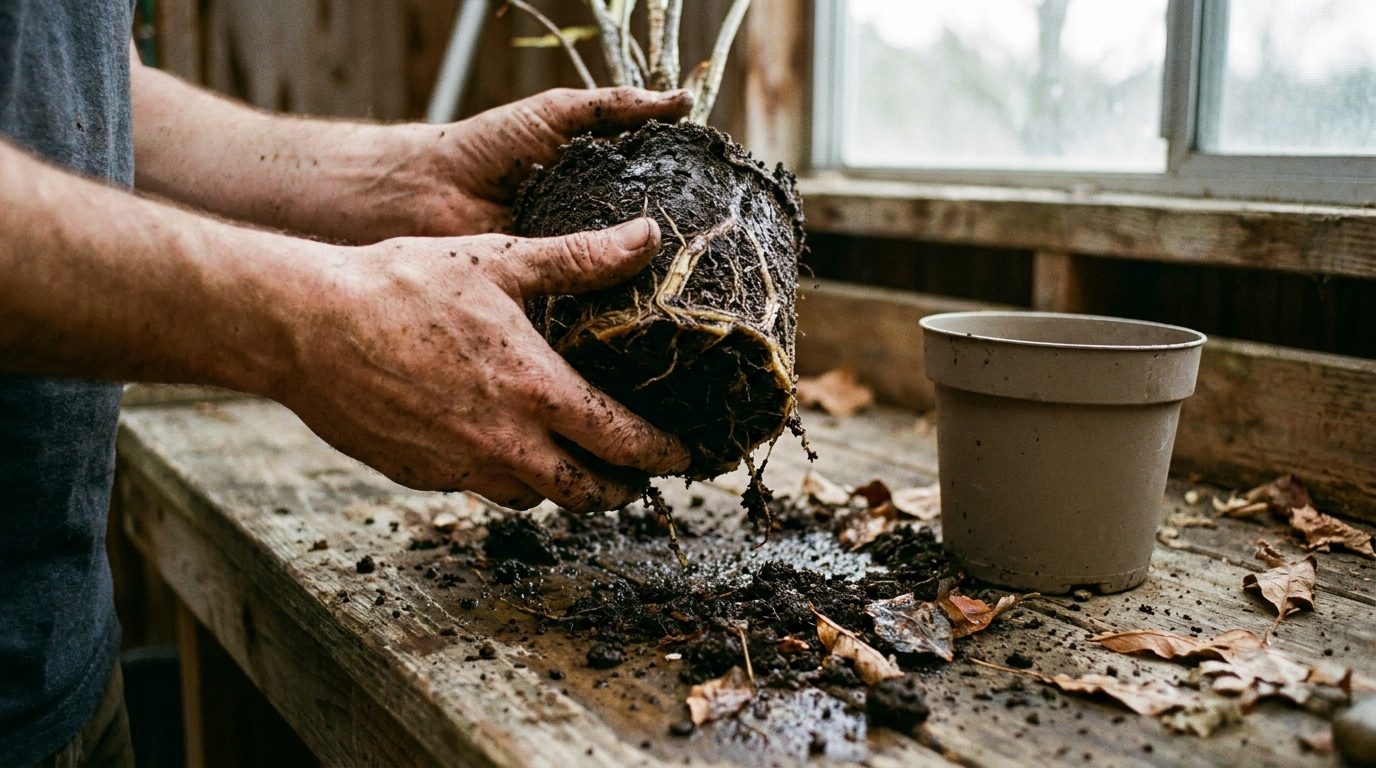
Tip it out and look at the roots. Healthy roots are firm and pale and smell of nothing. This is the diagnostic and almost nobody does it because it feels like an intervention.
Stop watering on a schedule
Watering every Sunday is the single most common mistake and it is guaranteed to be wrong.
A plant's water use varies with light, temperature, humidity, the season and how fast it is growing. The same plant needs water twice a week in July and once a fortnight in January.
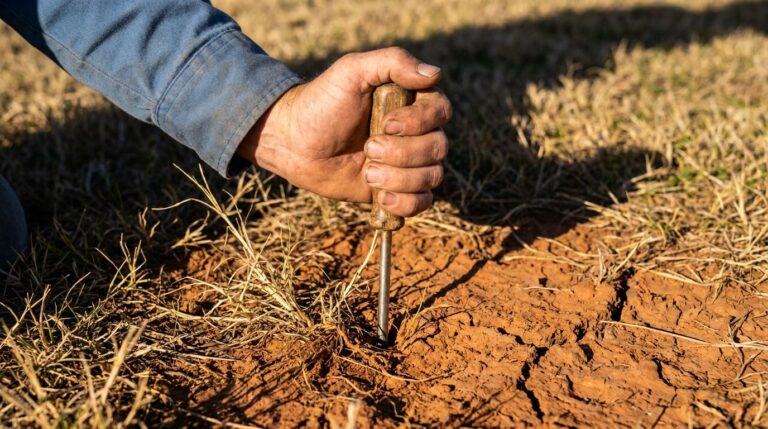
Check instead. Finger two inches into the soil. If it is damp at that depth, wait.
Lift the pot. You learn the difference between a watered and a dry pot by weight within about three tries, and it is more reliable than any moisture meter I have used.
When you do water, water properly
A little every few days is worse than a thorough soak when needed.
Water until it runs freely from the drainage hole, which wets the whole root ball and flushes accumulated salts.
Then empty the saucer. A pot standing in water is a pot with no air in the bottom third of the soil, and that is where the rot starts.
The pot matters more than I thought
Drainage holes are not optional. A decorative pot with no hole is a container to put a plastic nursery pot inside, not a container to plant in.
Terracotta breathes and dries faster, which forgives overwatering. Plastic and glazed ceramic hold moisture, which forgives forgetting.
Choose according to your own failure mode. I am a chronic overwaterer, so nearly everything in my house is in terracotta.
Pot size. A plant in a pot far too large sits in a volume of soil its roots cannot use, and that soil stays wet. Repotting into something enormous kills plants regularly.
The soil
Ordinary garden soil in a pot is a death sentence. It compacts and it will not drain.
Use a potting mix, and for anything prone to rot, add perlite or bark. My succulents and my orchids are in mixes that look far too coarse and drain in seconds, and they are the healthiest things I own.
What changed for me
I stopped watering on Sundays.
That is genuinely the whole thing. I check instead, and I water plants individually when they need it, and the mortality rate in my house went from embarrassing to acceptable.
It took me an unreasonably long time for somebody who is supposed to know about plants, and I tell people about it because the master gardener badge does not stop you from drowning a fern.